Category: Uncategorized

For a great haircut

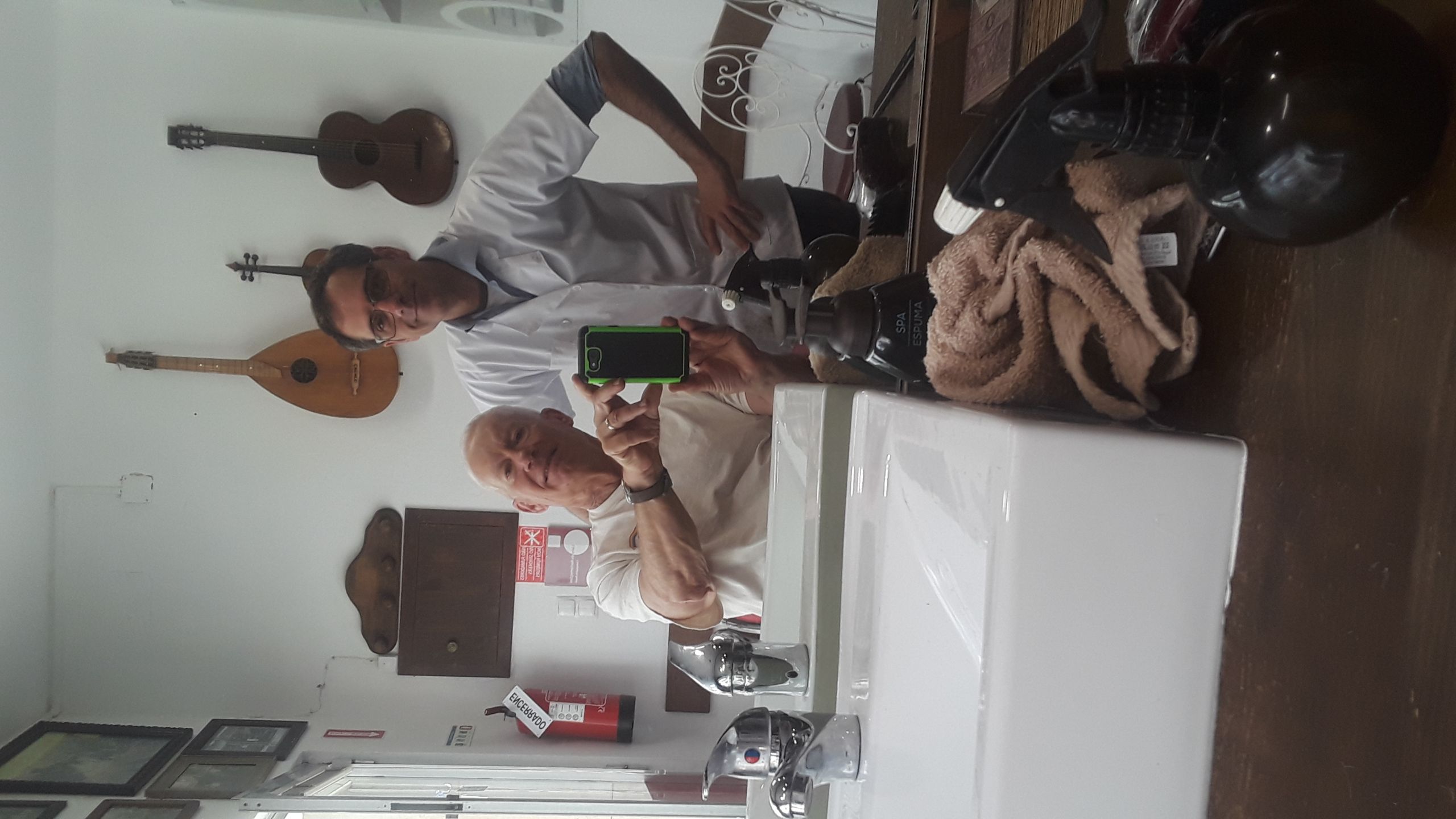
My barber and me after he finished his masterpiece in Lagos, Portugal.

I went to Lagos, Portugal, and got a the best haircut I’ve gotten in years. I won’t say I went to Lagos to get a haircut, but I did go to Lagos, and I did need a haircut, so I started looking for a barber. Barber shops appear fequently along the sidewalks of Portugal. Prices are cheap. The local men look trim and neat. A perfect chance, as they say, to sample the local wares.

Not, in noting this, to take anything away from the haircuts I usually receive from my wife. Those have the advantage of being free. In addition, her favorite (and only, I might add) customer usually sits without clothing, to keep the nasty little hairs from taking up residence beneath his collar. I often suggest to my wife that she also do her work without clothing, for no other reason than my overwhelming desire to keep her clothing from taking on my haircut. She demurs.

I feel extreme regret that I didn’t ask my Lagos barber’s name, in the excitement of paying 8 Euro (+2E tip) for his fine work, which included two electric passes, a comb-and-scissor round, and a straight razor finish. At home, we use a weed whacker.

In any case, if you should read this and find yourself in Lagos in need of a haircut, by all means visit Barbearia Vieira at Rua Conselheiro Joaquim Machado No. 38, or call 914-276-427 to find out if he has a line. He takes a break at noon for lunch.

Great people, great pais (country)

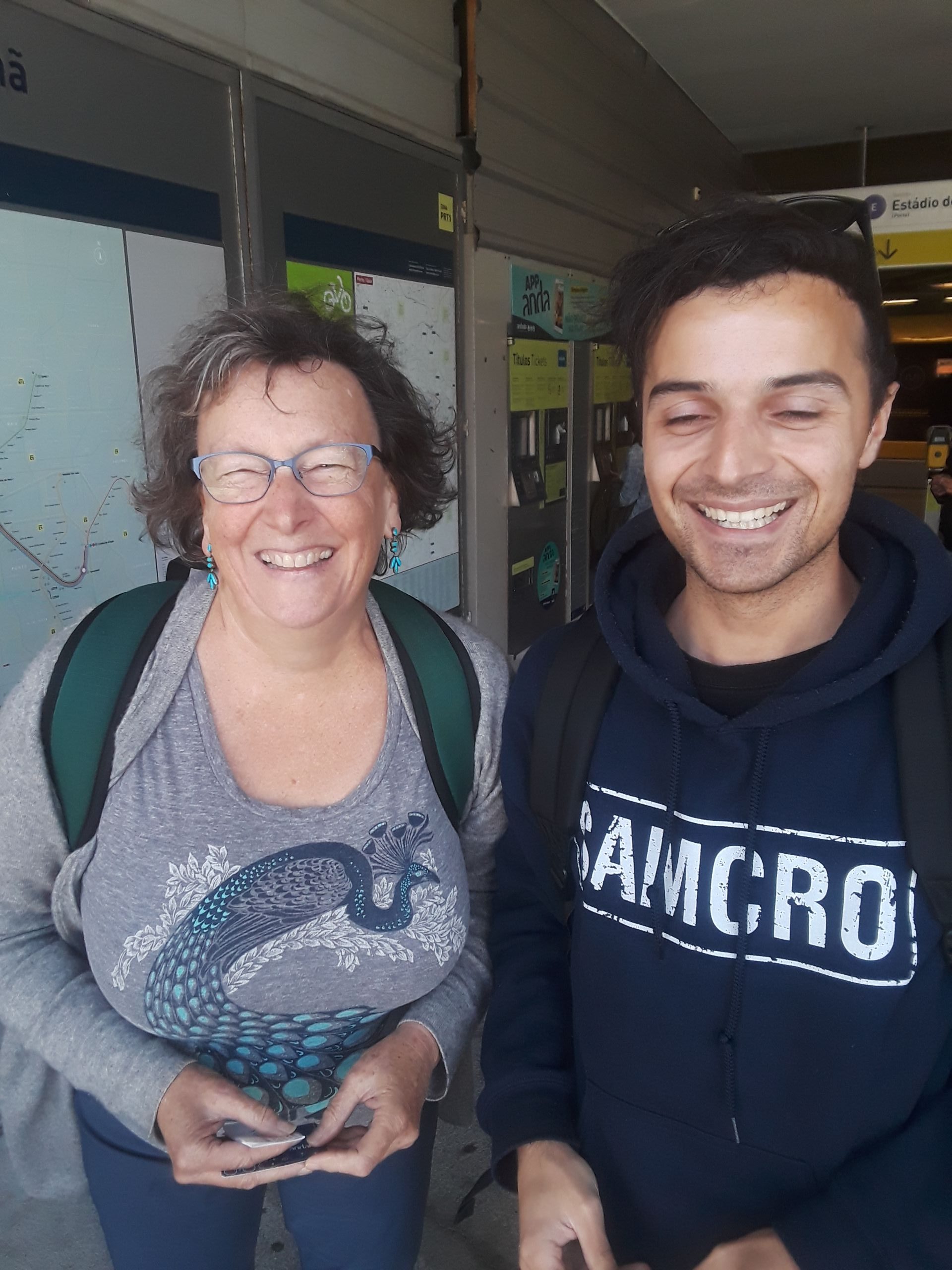
My wife, Kathy, and Digo, after he helped us with Metro ticketing.

Midway into our third week in Portugal, I have to say (not because someone has a gun to my head, but because it’s true), the people of Portugal are marvelous. Almost to a one, they are warm, welcoming, helpful and tolerant of the English-speakers in their midst. And we are a bunch, if you factor in north Americans and Brits and Aussies and others of the former British empire.

First, let me extend profuse thanks to Digo (“Like Diego, but no ‘E’,” he said), who came to our rescue five minutes after we stepped from the train in Porto. Our next task was to figure out the Porto Metro system, which operates on a completely different model than the one with which we had become familiar in Lisbon. Ever the soul of wit, I told my wife, “Looks like Greek to me.”

We’re standing in front of the ticketing machine, reading all the fine print about buying tickets based on zones of travel. The farther you want to go from where you stand, the more you need to load onto your travel card. It’s a lot to ask of people who have just arrived and don’t know bupkiss.

Digo to the rescue. He’s buying his own tickets at an adjacent kiosk, sees our plight, asks if we need help.

“A lot,” I say, smiling.

He leans in, asks the triage questions, helps us dial up the screen and select from several options, all in Portuguese. The most confusing one to us is the one about some tax and whether we want a refund and, if so, what our tax number is.

Digo helps us breeze past this irrelevancy, to the payment screen, and determine that, with this kiosk, we can pay by coin or card, but no paper currency. Have card, will travel (if you don’t get the Paladin reference, check out “Have Gun — Will Travel” on Wiki).

With our angel on hand, we soon held passes to the Metro, and Digo was off to another line and his own destination.

Such a sweet young man, who apologized for his limited English, which embarrassed us for our lack of more than 10 words of Portuguese. He said he had traveled himself, and benefited from the kindness of strangers, which was the real lesson here.

At one time or another, we all are strangers, and all are locals. I recall how excited I was to welcome foreigners to table at the restaurant my wife and I once ran in our small Oregon town. I understood, from past fumbling experience and frustration at having no language skills like the ones I had at home, what it must be like for them to sit at table and try to order from a menu printed in English.

Here, ground zero for European travelers seeking a good deal and a better time, almost every menu is printed in Portuguese, English, French and German. The Portuguese are prepared for visitors who speak a different tongue, knowing how much they can enhance that experience by meeting them where they speak. 

As we learned, students in Portuguese schools study their native language, but also are required to take another. 

As a high schooler in the U.S. in the 1960s, a foreign language was an option, not a requirement. Different worlds, different times. In a global economy, we all need to be a little multilingual.

Still, not all embrace this notion. At least not in the view of the Frenchman seated near us in the TimeOut dining hall in Lisbon. He travels often to the U.S on business and speaks fluent English. His wife speaks none. So it may not be true that almost everyone speaks a little English, it is probably true that almost everywhere, someone does. Our new French friend thought we were English, because that is how we first broached conversation. He observed that the English never bother to learn other languages.

We clarified our country of origin, but couldn’t dispute his conclusions as regards our own countrymen, even those who bother to leave Indiana for a European visit. I doubt that many Americans feel a need to study the language of the country they plan to visit. It comes from a chauvinist belief that everyone speaks English — or should.

Even though I may lack more than a smidgin of any other tongue, it bothers me to open by asking, “Do you speak English?” At the train ticket counter in Aveiro, I opened with a simple, stock Portuguese query, upon which the ticket seller said, “Don’t bother. I speak English.”

We felt for each other. He saw more benefit to himself than enduring my bastardized, minimalist attempts at engaging. And I felt relief that I didn’t have to struggle through that. 

For myself, I have long tried to approch host countries with a handful of basic phrases that can get me through situations that most visitors encounter.

My education prepared me, in weird ways, for travel in and around the Mediterranean. I grew up Catholic. We read Latin at Mass. I later studied Latin for a year, which helped me study English and, later, tackle Spanish after three years of German.

On my first trip to France, I felt totally handicapped by my lack of talent at that language. A few of my hosts were forgiving, but not all. It was a stark contrast with the situation in Portugal, where most guest service workers speak a little English. I’ve tried to add my basic kit here, but seldom feel a crying need for it.

(For the record, I find that learning a few basic infinitive verb forms for “to want,” “need,” “have,” “go,” “buy,” “eat,” and “drink,” plus a dozen or so key nouns — beer, bathroom, food, car, airport, bus, taxi, hotel, room, restaurant, etc. — will get you a long way.)

No matter how much or little language you know, the most important phrase to add — out of simple courtesy and respect to your hosts — is “thank you.”)

I was chatting with a shopkeeper in Aveiro, Portugal’s charming Venice knockoff, about local wines. She quickly discerned that I was not from Portugal, and in comfortable English, helped me select a bottle. We commiserated about our respective knuckleheaded presidents (she was from Brazil), and I apologized for not knowing much Portuguese.

“Have you learned a little?” she asked.

I said I had — “A very little” — and repeated the phrases for “I want” and “I need.”

“And obrigada,” I said.

She smiled. “Of course,” she said. “Thank you.”

She met her boyfriend, a Briton, while studing English in Manchester, England. I asked if he spoke Portuguese.

“No,” she said, “he’s lazy.”

But he’s still her boyfriend. For now.
Pedro, you’re my kind of guy

Too many people approach travel like a to-do list. Read the guidebooks and brochures. Then go, go, go. Tick them off to say you did, and … what of it?

Yes, seeing the new and historic can stretch the mind a bit, but not if you have to fight your way through a throng armed to the teeth with cell phones and silliness.

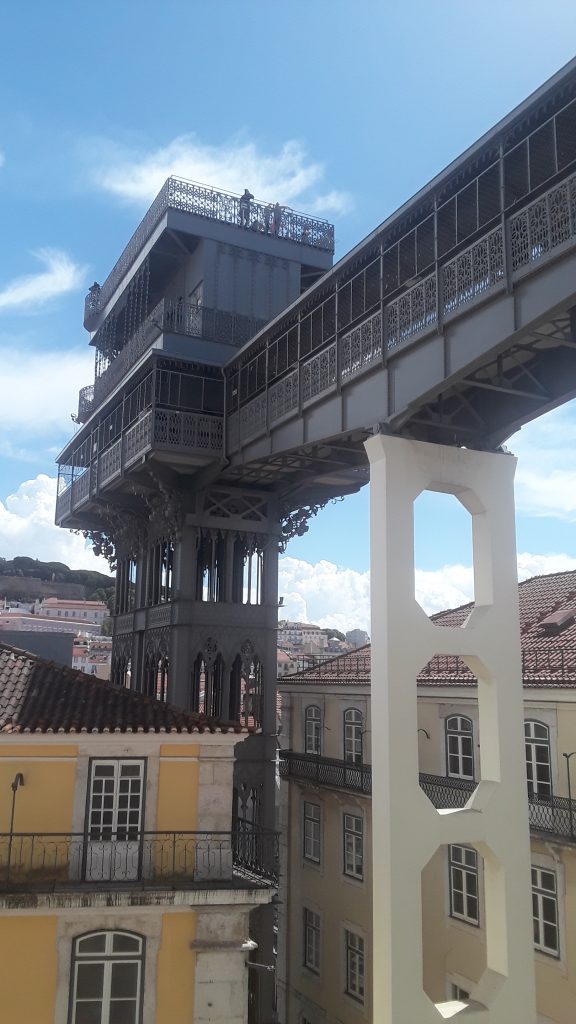
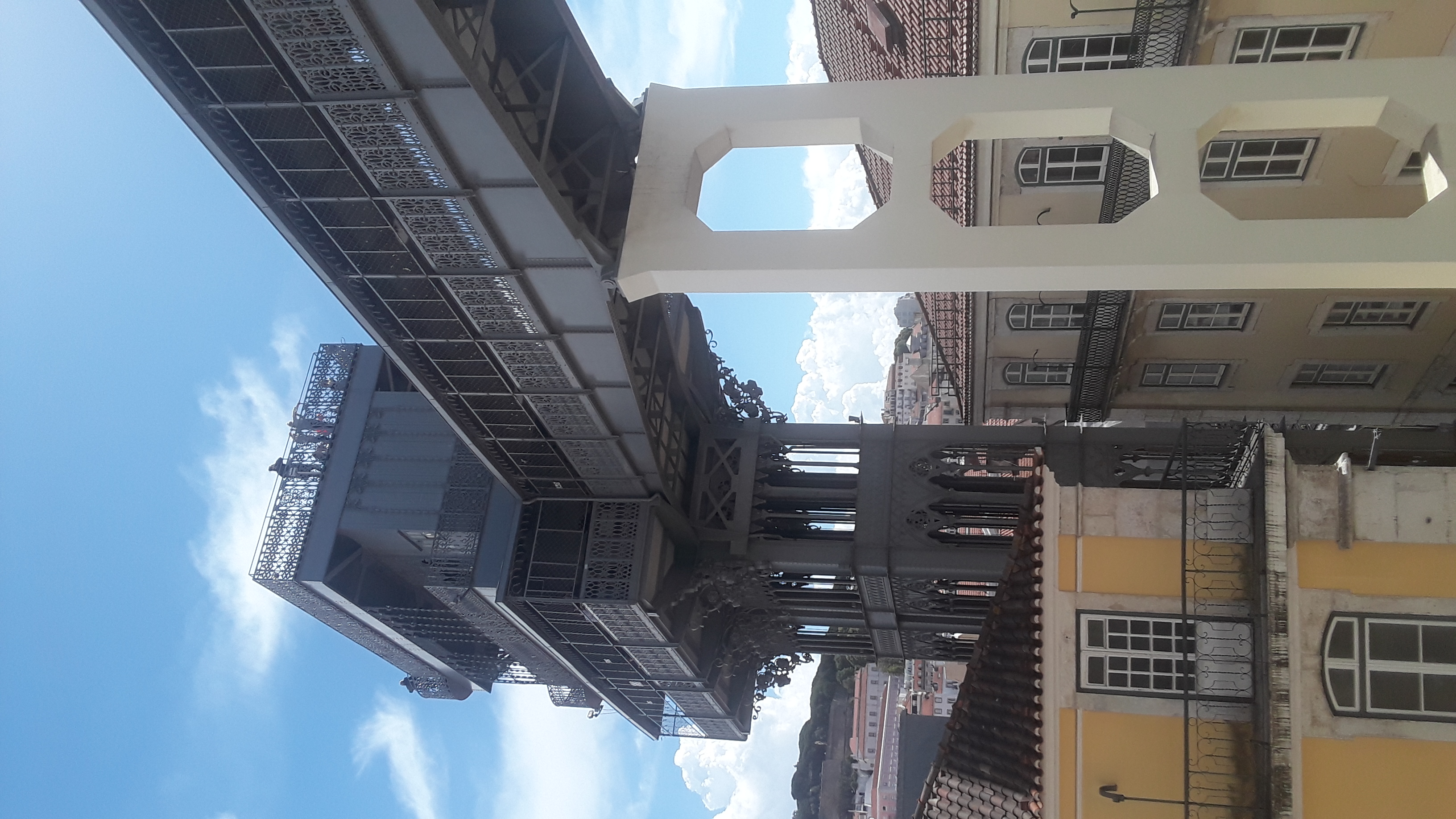
Elevator de Santa Justa, a stunning piece of work from 1902, wrought iron reminiscent of the Eiffel Tower in Paris.

To illustrate, from our current visit to Portugal, Today, we rose early and scurried off by Metro to the Entre de Campos train station for a visit to the historic town of Evora.

Nice place. Lots of old buildings.

Lots of Europeans from all countries sitting around the square, sipping espesso and sucking on Galouises and leaving me to wonder, couldn’t they do this on their back deck? Why fly and ride or drive to Evora, to sit and watch the world go by? Didn’t they know there were old buildings to stand in front of and document for the bored grandkids with their cell phones?

Same question for me. Not that I’m jaded, but old buildings and relics and such are much less interesting than the people, when you can figure out a way to engage. Without Portuguese language skills, I rely on the English speakers to save me from feigned shopping.

So I was oh-so grateful, on our long trudge uphill to the Castelo de Sao Jorge, in Lisbon, to dip into a little shop opposite the shop that had seduced my spouse. Inside, checking out the souvenir T-shirts (yes, I admit it; so sue me), I heard the voice of Pedro Chaves explaining that the images on the front of the shirts represented past and present brands of canned sardines. The shirt smelled better.

Sardines are everywhere here, on the menus, and canned and decorated in cute collectible (or giftable) labels and stacked in shops where visitors pass.

Pedro has a love-hate relationship to the city’s economic engine, no doubt familiar to folks who remember Carmel when it was sleepy.

“Lisbon is now like Disneyland,” he said. “Everybody is coming here because we have wine for 4 Euro a bottle.”

Despite the flood of visitors, and its impacts, Pedro doesn’t want it to go away. “I need it for my business,” he said.

So he put on his Chamber of Commerce hat, and gave me a handful of slips of receipt paper with notes about what to see and do and how to shop for Port.

One recommendation was the wine bar near the Berardo Museum (see previous post). The owners of that fine little place had previously run it near Pedro’s shop. During their tenure there, they routinely hosted traveling groups of chefs to orient them on Portuguese wines. Small world, right?

So nice of Pedro to guide our explorations. I wasn’t sure if I was buying the T-shirt because I liked it or just to thank him for his time and wit. Both, likely.

As is commonly the case here, he spoke far better English than I did Portuguese (I’m making liberal use of “obrigado,” local lingo for “thank you.”)

Pedro knows people in Wisconsin and Florida, and inferrred that I belonged to the subspecies of American traveler known as “Trumpus ejectus,” so he dialed up a funny video of Trump telling the Christmas story. We shared a guffaw.

Credit card receipt in hand, my wife and I resumed our climb to the castle. My wife has never been to a castle, nor, obviously, used a restroom in one.

After getting in the requisite ticketing line and amusing ourselves chatting with the sweet lesbian couple from Argentina (one of whom is a pathological map collector, like me) we got inside, found the restroom (open and functional, yahoo!), the climbed all over the castle and took in the views of Lisboa.

Then we left and walked back downhill.

Anyway, lovely time. Great food. Lots of old buildings. Better new T-shirt. 🙂 And a really nice restroom back at our rental unit.

Scene but not heard above the streets of Lisbon.

(To meet Pedro Chavez yourself, go to Nobre Povo … Portuguese Contemporary Handicraft, Rue Bartolomeu de Gusmao n 23 e 25, 1100-078, Lisboa, 351-218-888-023, geralnobrepovo@gmail.com)

Close encounters of the marvelous kind

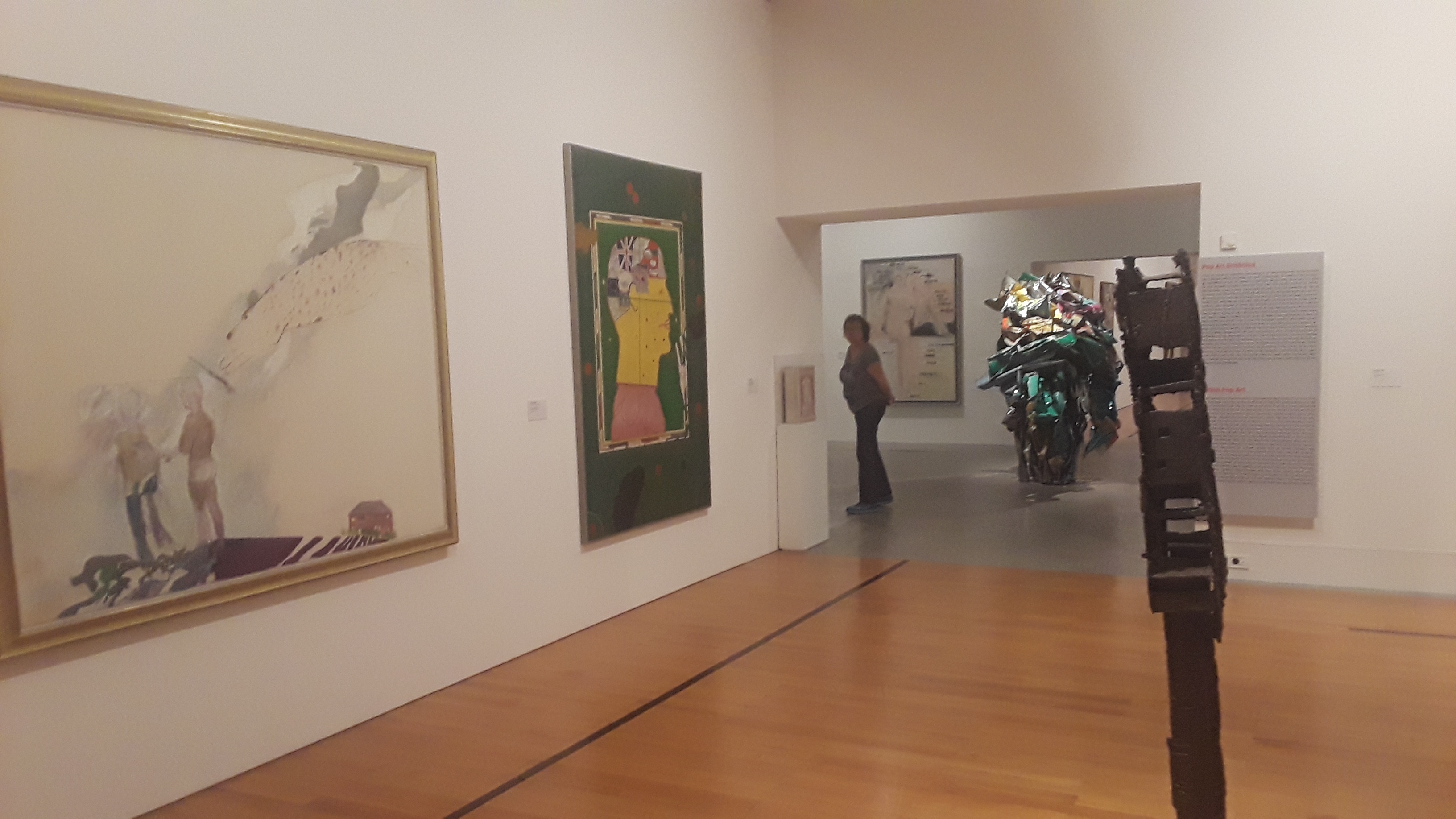
David Hockney’s Image Emphasizing Stillness at the Museo Colaceo Berardo in Lisbon, Portugal.

When the world gives you rain, it also gives you museums.

Who wants to be inside when the weather is glorious, no matter how glorious the weather inside? The interior of a building looks pretty much the same anywhere in the world.

But if the choice is between wandering around in the dry insides, or enjoying traffic splash runoff rainwater on you as it passes, go inside. That’s what we did on our first day in Lisbon, given a steady drizzle, not that it deterred us from walking the 3.6 miles from our rental to the Museu Colecao Berardo in the city’s Belem neighborhood.

Along that route, we tripped on the recurrent leitmotif of our visit. This city, gorgeous though it be with the monuments and rococco ornamental insitutional edifices, apparently lacks the ability to provide public restrooms.

So we wander on with cranked and cranking bladders, constantly on the lookout. We had walked and walked and walked, and my wife was feeling the need (doing, as we say, the St. Vitus dance). We came to an opening in a wall and there was this jumble of shipping containers stacked adjacent to and on top of each other. It was a concept community called the Village Underground Lisboa, and looked well worth exploring, but was closed.

Mostly. The initials WC caught my eye. I told my wife, poining her to an open door. “Go for it,” I said.

She did, and was relieved to find it open. A private enterprise comes to the relief of the bladder-challenged visitor. Its cousin, the restaurant or clothing store where a desperate traveler stumbles in and asks, plaintively, for “el bano” or “servicios,” and the weary and reluctant proprietors accede to human desperation.

Why can so many cities, destinations and beneficiaries of millions in tourist dollars, not provide somewhat deliberately and evenly spaced public facilities? And when they do provide such facilities, maintain them? And keep the doors open? Wandering the Jardim de Estrela opposite the Basillica da Estrela, on a busy Easter Sunday afternoon, we found restrooms — closed, a rank puddle of urine soaking the garden plants adjacent to the locked door. One goes where one must.

For those not in search of a restroom, the innards of the Berardo Museum deliver visitors a richly varied modern art collection compiled — and later donated — by mining and banking magnate Jose Manuel Rodrigues Berardo. The restrooms lie behind the firewall of paid admission. Good luck finding replacement fluid at a drinking fountain.

The time inside paid a nice return on investment — sunshine, and drier skies when we were done with a rich but uneven collection from the 20th century, mostly. Stellar work hung next to stuff that left you scratching your head.

Tired and done with all that, we walked briefly to an Internet discovery — Enoteca de Belem, Travessa do Marta Pinto n. 10, 351-218-879-093.

Our server provided a link to another encounter the following day (see next post). A charming, multi-lingual native, he offered us tastes of three white wines before we chose our preferences and our meals arrived.

That coincided with the arrival at an adjacent table of five young people from all points on the globe who had met while bunking at a local hostel, and teamed up to tackle the fun. Listening to them laugh reminded me of similar bonding on a much earlier trip of my own. No nostalgia for the hostel experience, but without it, how could I forswear a voluntary repeat of such an experience?

Continuing on toward our temporary home, and to note an exception to the rule, we found facilities in the Jardim Alonso de Albuquerque.

Not to beat a dead sardine, but after all our bladder battles and frustrations, we found irony galore when we settled into our seats on the train south from Lisbon to Lagos. We were in the last seats on the last car — right next to two restrooms. Unlocked. Functional. Free (except for the price of the train fare).

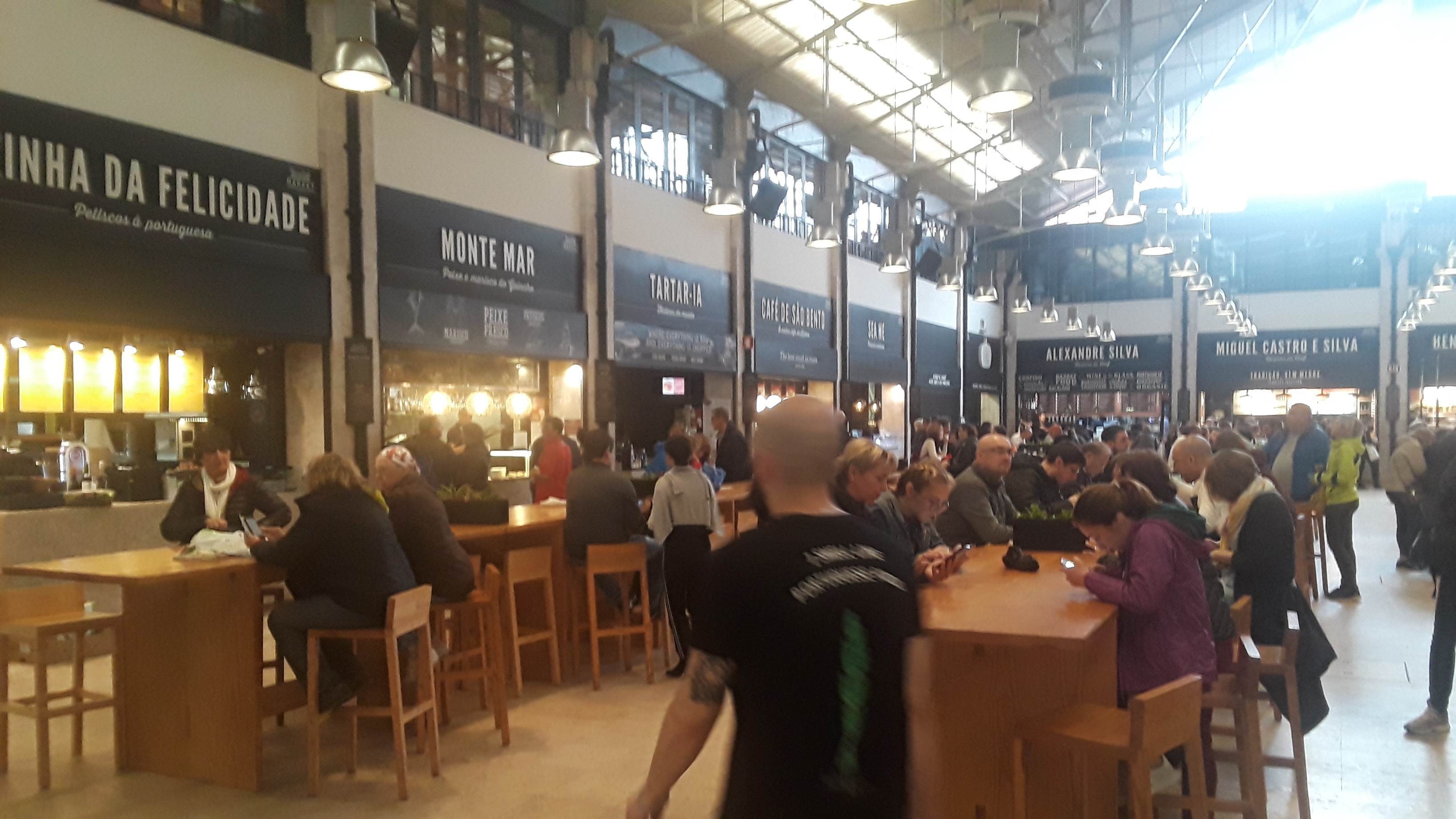
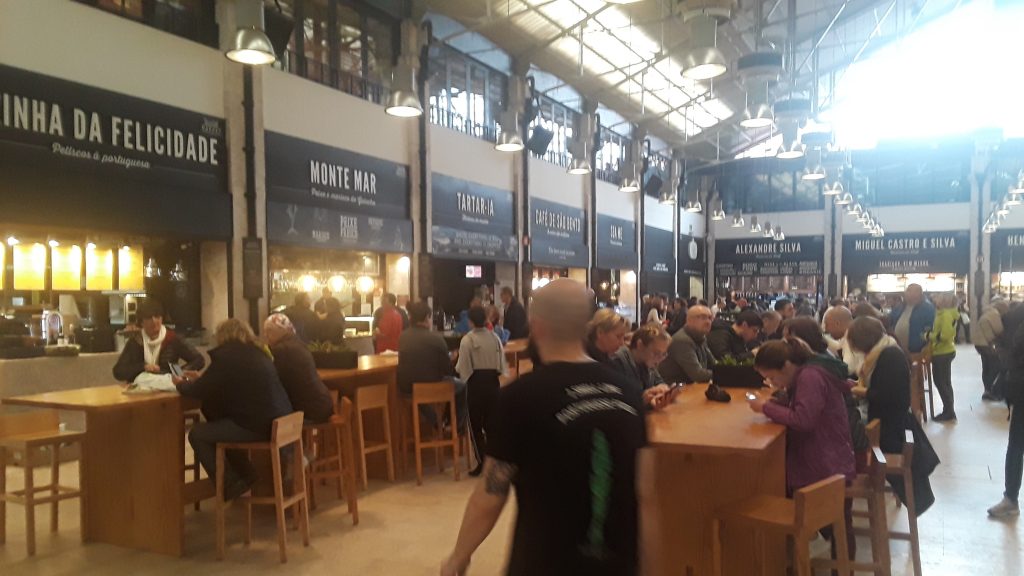
Inside the TimeOut public market.


Inside the TimeOut dining hall. Options and quality abound.

On our walk to the Berardo, we stumbled upon the TimeOut dining hall. It features sit-down options — some with Michelin-starred chefs — or take-out stands full of fine cheeses, cured hams, and beverages galore. Have I mentioned that wine prices go as high as your ego needs, but you can get a perfectly drinkable bottle just about anywhere for 4 Euros? Why drink water when wine is more affordable?

Just ignore the cost of airfare, which blows your average bottle cost out of the water.

Travel sucks, travel rocks

We slept 12 hours last night. After not sleeping at all for the previous 29.

After sitting in cramped airline seats for 9 hours between Portland and Amsterdam.

After blasting eastward through a truncated night and arriving in a strange land with as many signs in English as Dutch.

After hanging out for five hours, most in search of an electrical plugin so we could check on the happiness of our dog back home.

After arriving smoothly in Lisbon, and, to our surprise and thanks to the help of the lovely information officer — “Speak English?” A smile. “A little” — who explained how the Zap cards work on the Metro, buses, trolleys and urban trains, gliding quickly to the Metro exit that put us a short walk from sweet Marie, the young Austrian expat who was waiting on the sidewalk in front of our Airbnb rental to show us in and around.

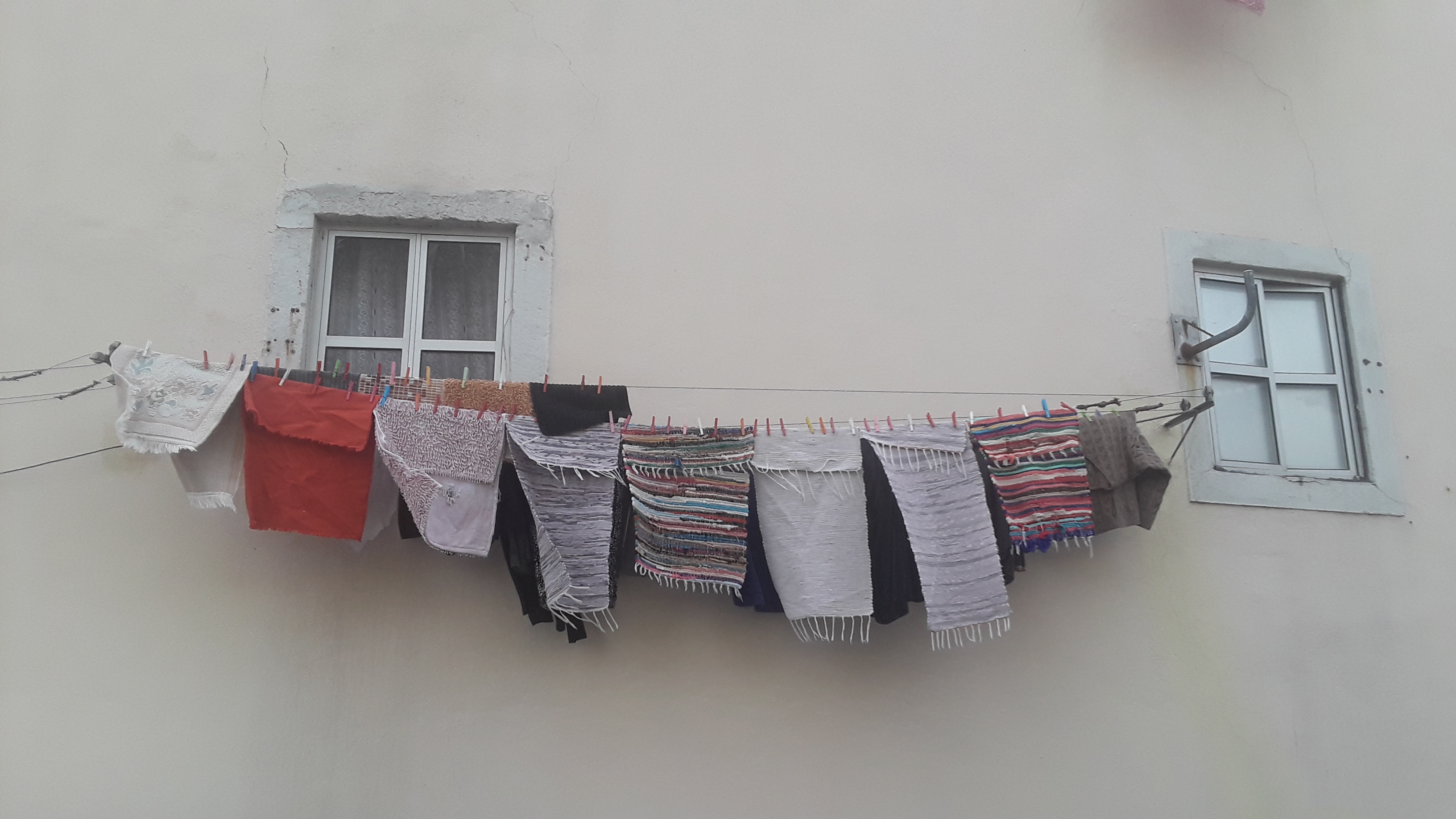
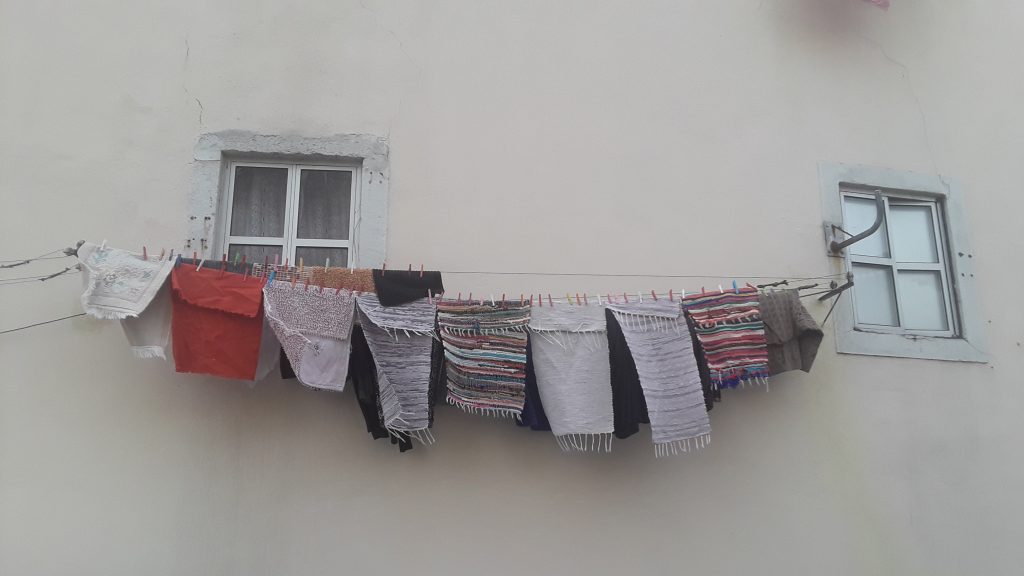
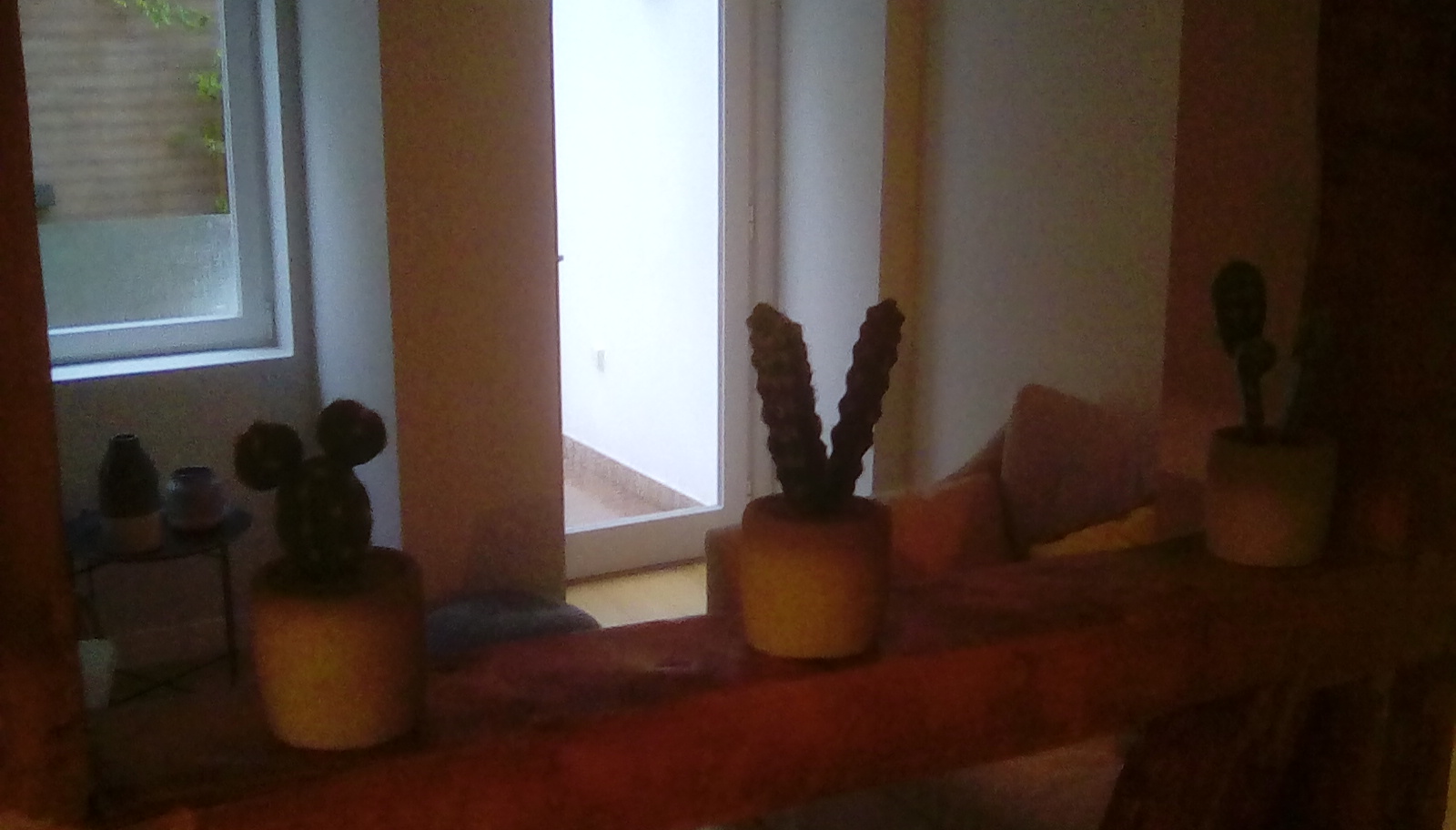
The photo above is a look through the living room of our place, toward the little patio out back, low below a canyon of windows and laundry lines.

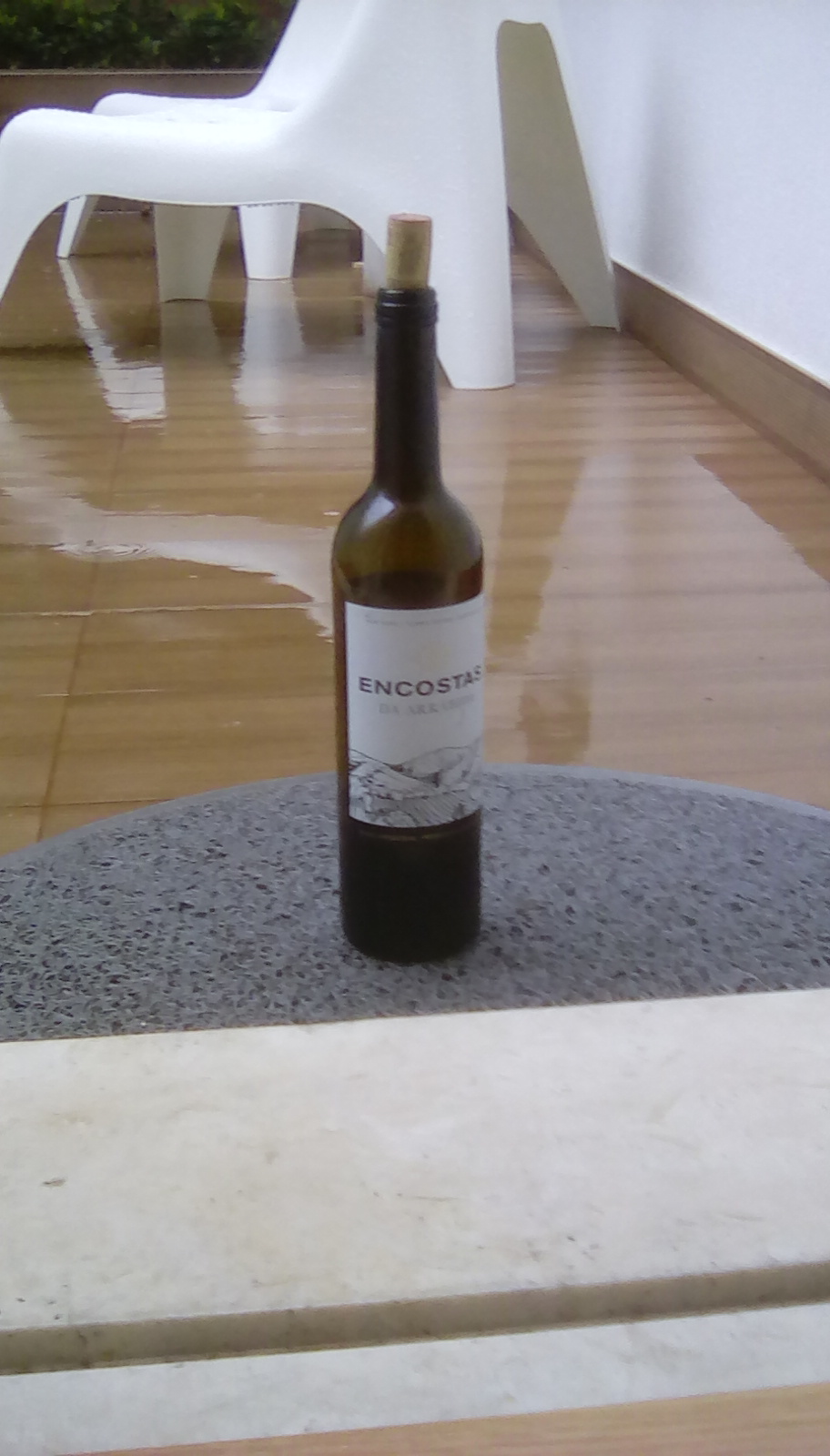
It was the perfect setting for the aged Gouda, hard salami, tomatoes and crusty bread that we washed down with a nice bottle of the local red — before tumbling into bed at 7:30 p.m. local time.

See what I mean? Travel is about stepping beyond the orderly comforts of our everyday lives, into a whiplash of stress and fresh surprises.

This is the first of a series of posts about our visit to Portugal. I abjure Facebook, so I will share links via old-school tools for you who may want to follow along.

My wife’s nearly brilliant future career in futzing

My wife loves food. Cooking it, and eating it.

She hates futzing, even though she’s pretty good at doing it.

Expert cooks build temples to their talent — restaurants. What if expert futzers did the same thing? Elevate and celebrate the futz, and it might become a pursuit worthy of actually … pursuing.

My wife’s love of food became abundantly clear after our mid-life relationship blossomed, and we graduated from home-and-away sleepovers to shared residency beneath her roof.

That passion revealed itself in numerous ways. At the time, we both worked in freelance communications. Straight journalism, or marketing copy, or strategic planning. Whatever someone would pay us to do. I enjoyed it, more or less. She hated it.

I enjoyed it more because I didn’t have to wear a tie or commute to my upstairs office. I enjoyed it less because the occasional client would exercise some previously unmentioned clause that meant I wasn’t likely ever to get paid.

Kathy had connections that led to fat contracts, and tackled them with gusto, but it was all pretty Sisyphean for her. It was definitely not futzing.

Only at the end of the day, when she closed her computer, did she lift from her chair like Tinkerbell and flit into the kitchen, eager to make magic happen.

For her, it wasn’t a chore so much as a drug. Most of the time, she would rummage through the fridge and cupboards, pull a bunch of stuff down, start chopping and frying and mixing and blending, and before long, we ate better than most people dining concurrently in the city’s finest restaurants.

She wasn’t born this way. She learned by doing, layering on skills learned from the need to feed her 5-year-old self, and later, from an occasional class, from buying and reading cookbooks, from tapping the culinary zeitgeist.

Pre-Internet, she had subscribed to, and collected several years of Bon Appetit magazine. Filed them in those magazine storage boxes, indexed by year and month. At some point in the past, she had gone through each issue and logged information about cuisine and recipes and seasons onto index cards. Then, if she wanted a squash recipe for Thanksgiving, she would know which issue to pull and consult.

As you must gather, this dedication betrays a little more than what most would think of when someone calls themselves a “foodie.” Or a futzer.

My wife has never called herself a foodie. She prefers “chef.” She earned it, not after writing a check to the Culinary Institute of America, but after acceding to my supportive urgings, and opening not one but two restaurants.

Kathy is a bit like a border collie. She needs a job. She is not happy, lying around the house, chewing on rawhide.

“I love getting up early and getting out for a run like this,” she said today, as we embarked on a run at 9 a.m. “I hate futzing around all morning and showing up at the trail around 11.”

Even though we sold our last restaurant three years ago, she has morphed into a cooking collie. Like a collie eager for a cat to pass (and chase), she looks for cooking gigs to chase. It keeps her out of trouble, and few people call the cops when she shows up in the kitchen and turns out surpassingly edible grub.

Without the dog whistle of a restaurant and its myriad demands, she can sometimes drift into futzing. Such a great word. It means that one is “wasting time.” But Kathy applies it to things that, basically, are not cooking. If she is not cooking, she is futzing. Reading books. Browsing the web. Sewing napkins. Arranging flowers or talking to her son on the phone or planning little social events.

All that is essential, yet she thinks it secondary to the primary thing in life — cooking. I am inclined to encourage her greater attention to futzing, since that is more of what life promises in our 60s and beyond.

Imagine, striving to become the world’s best futzer. Hours spent in pursuit of epic futzation. A web site devoted to famous futzers. Record-length futz sessions, remarkable for the sustained indolence.

Instead of belittling it, imagine celebrating it. She could travel the country, talking to famous futzers, posting videos of those interviews, sharing common techniques, building Top 10 Snacks for Futzing.

That last one, of course, would lead her back to cooking, and far from futzing.

I thought this futz-a-thon was a great idea. Then I remembered. We already have a world dedicated to the celebration of futzing: Social media.

Despite spreading propaganda and fake news, social media is basically about people sharing the hairballs of their lives. “Hi, Friends, today I futzed around with the cat. Tomorrow, … well, who knows.”

Futzing is like that. No agendas, no pressure, just aimless, idle drift, from one room to another in search of nothing in particular. The Zen-like joy of futzing descends onto one’s shoulders at the point that we realize futzing is a goal unto itself. Flow into the futz, and the futz will reward you with a state of futzana.

When you realize you’re going nowhere, but enjoying the trip just the same,  you have done the nearly impossible — turned nothing into something. You’d be surprised to find out how many people shared your interests in futzing, and would love to meet and spend time with you, sharing tales of your respective futzing.

Don’t knock it until you haven’t tried it.

Copyright © 2026 Chisel Chips

Theme by Anders NorenUp ↑