Tag: art

A magic moment during an artsy mood encounter

Most of my creative energy flows into writing. That river branches into a visual stream. For most of my life, I’ve kept a file of ideas for physical art that came to me unbidden. In 2017, I experienced a burst of energy. Like my soul got in my face and said, “What are you waiting for? Get your ass down in the I garage and make this shit.”

So I did. Before I was done, I had created three sculptures and a painting. These all relied heavily on found materials. I love browsing the scrap piles at construction sites. Other stuff just falls from heaven, like when I’m walking through a parking lot and look down and spy a lost baby pacifier. It goes into the art bin, for future work.

I’ve been feeling the urge again lately. I have an idea that involves a vertical piece of natural (as opposed to milled) wood. I went through the transfer station, looking at the yard debris pile for something I might use. Nope. I looked at my own wood pile. Nope. Too short.

Yesterday, on my daily dog walk east of town, I came to the turn point at the Pocket Falls. Last winter, during a storm with strong wind, a large fir snag toppled into the base of the falls. Ka-blooey. Wood everywhere. While the dog sniffed, I scanned the debris pile. Ah-ha! There it was. The perfect piece, correct diameter, and with some judicious trimming, of perfect length (height).

I was clearing branches that held it down, yanking on it, when two bicyclists stopped, a young man and his girlfriend.

“What are you doing?” he asked.

Not accusatory. Just curious. Love that. If you wonder, ask. So I told them about my idea and how I hoped to use the log. I dragged it to the side of the road. “I’ll get it next time, when I’m not dragging a dog,” I said.

We parted. “Good luck with your project,” she said.

A hundred feet toward the trailhead, the male cyclist pulled up next to me.

“If you want, I can take the log to the trailhead for you,” he said.

“Seriously? You don’t need to do that.”

“It’s not a problem. It would be easy on my bike.”

“That would be awesome,” I said.

He asked my make and model of car, so he could set the log near it. Then he went back and got it and the last I saw, he was riding up ahead of me with a piece of my future sculpture perched on his shoulder.

His girlfriend rode past. “What are your names?” I called.

She told me. “Thank him again for me,” I said.

“He likes to do this.”

And off she rode.
Letter to my son and his lady friend after a long and late night with

Dear Max and Hannah (please share this with her; I don’t have her e-mail),

We’re alive. Up, finally, and pouring coffee to the veins. Arrived home at 11:30, then decompressed with whiskey and snacks until 1, then bed. Ugh. Long day, but so worth it. Wanted again to thank you both for the lovely gift of art (performance art). It was magical, to see a live performance of the play, so well done, with such good company.

On that note, and linked back to your table thoughts on college education, degrees, BA vs MA/MS vs. … 3-month certificate. It’s a fascinating debate, a bit now of a pendulum swing, which is depressing interest in the humanities (which give us “Fiddler on the Roof”) to the favor of CTE (career and technical ed, as you must know).

Here’s a piece in today’s NY Times addressing that …

https://www.nytimes.com/2020/01/11/opinion/sunday/academics-humanities-literature-canon.html?action=click&module=Opinion&pgtype=Homepage

and an earlier piece, if you’re a glutton for punishment, on the same topic.

https://www.nytimes.com/2018/08/08/opinion/oh-the-humanities.html


I’ve always been a humanities person, but got nudged toward a practical application (journalism), not exactly engineering, but clearly with a professional application in mind.

I recall the prof who thus nudged me noting that an English degree wouldn’t lead to a decent job. And, later, another English prof advising me that I could become a “hack” (i.e. journalist), or pursue art (i.e. literature, and … well, he didn’t do the economic calculus that his colleague had, which may have been why, no matter how much I loved literature, I tilted toward journalism). I should note that the latter gentleman was a lovely gent of Persian descent, who I knew as M. Zavarzadeh. I Googled him. His first name was actually Mas’ud.

Back in the day, there were no journalism degrees or programs. People came to it from the humanities, after studying all the things that go into good journalism — sociology, history, poli sci, literature, and (tech tilt here) economics.

For your world (K-12), there’s a case to be made that some students really may prefer a CTE track and get on with it. But who decides? And how do we decide? It seems a crime to deprive them of the opportunity to explore the humanities, to see if that resonates with them, before somehow (the test?) determining that they should take shop class. That’s how they did it back in my day — the kids with better grades and more dutiful attention to their studies got into the college-prep track. Everybody else took home ec and auto shop. Human potential is so mysterious. People who are really good with their hands and mechanically inclined can also be good thinkers on other topics. Farmer Wendell Berry comes immediately to mind. The duality is complementary, not competitive. It’s not either/or, but both/and more.

So much for a Sunday morning brain dump. Take two aspirin and call me in the morning.

Close encounters of the marvelous kind

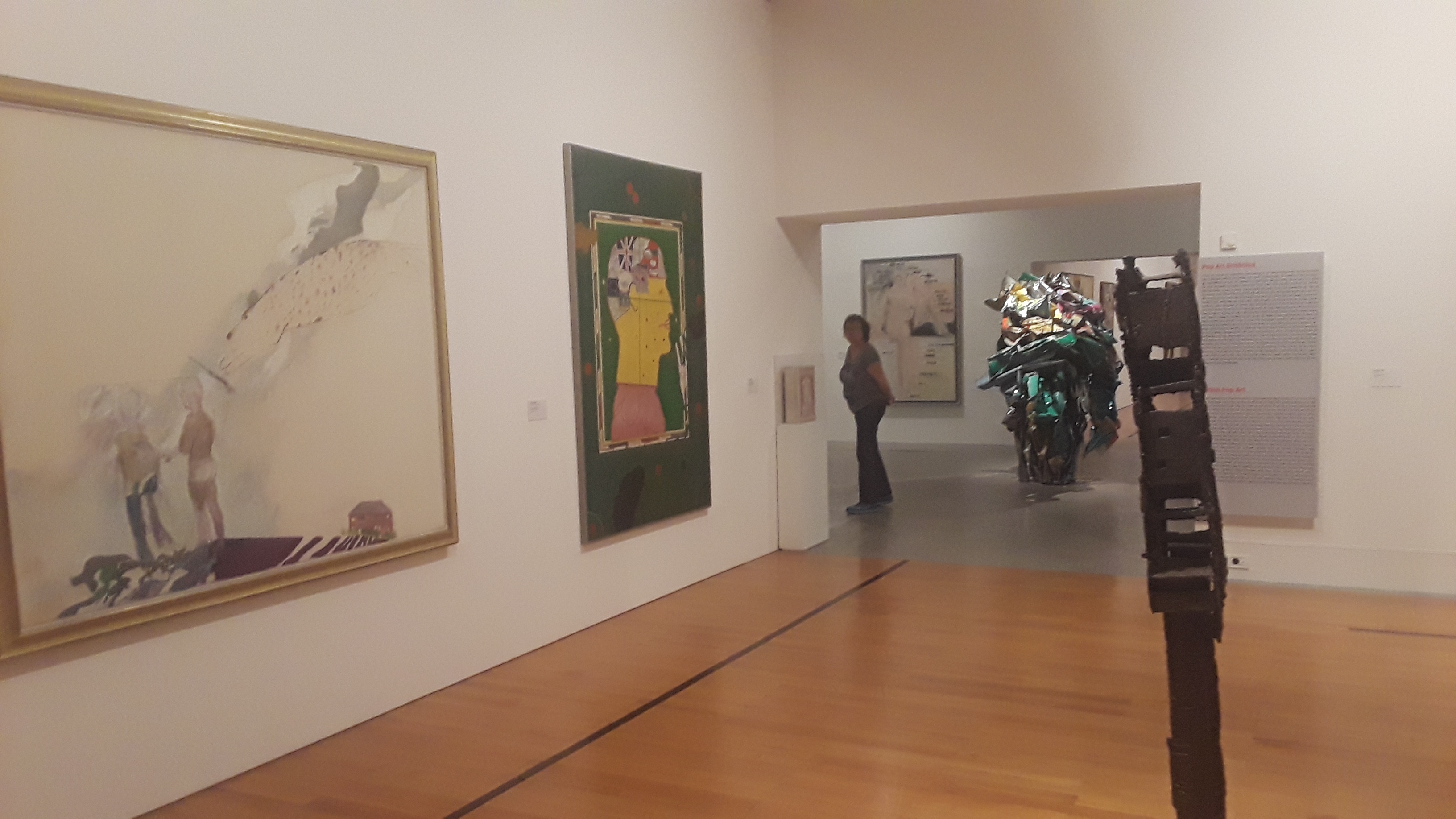
David Hockney’s Image Emphasizing Stillness at the Museo Colaceo Berardo in Lisbon, Portugal.

When the world gives you rain, it also gives you museums.

Who wants to be inside when the weather is glorious, no matter how glorious the weather inside? The interior of a building looks pretty much the same anywhere in the world.

But if the choice is between wandering around in the dry insides, or enjoying traffic splash runoff rainwater on you as it passes, go inside. That’s what we did on our first day in Lisbon, given a steady drizzle, not that it deterred us from walking the 3.6 miles from our rental to the Museu Colecao Berardo in the city’s Belem neighborhood.

Along that route, we tripped on the recurrent leitmotif of our visit. This city, gorgeous though it be with the monuments and rococco ornamental insitutional edifices, apparently lacks the ability to provide public restrooms.

So we wander on with cranked and cranking bladders, constantly on the lookout. We had walked and walked and walked, and my wife was feeling the need (doing, as we say, the St. Vitus dance). We came to an opening in a wall and there was this jumble of shipping containers stacked adjacent to and on top of each other. It was a concept community called the Village Underground Lisboa, and looked well worth exploring, but was closed.

Mostly. The initials WC caught my eye. I told my wife, poining her to an open door. “Go for it,” I said.

She did, and was relieved to find it open. A private enterprise comes to the relief of the bladder-challenged visitor. Its cousin, the restaurant or clothing store where a desperate traveler stumbles in and asks, plaintively, for “el bano” or “servicios,” and the weary and reluctant proprietors accede to human desperation.

Why can so many cities, destinations and beneficiaries of millions in tourist dollars, not provide somewhat deliberately and evenly spaced public facilities? And when they do provide such facilities, maintain them? And keep the doors open? Wandering the Jardim de Estrela opposite the Basillica da Estrela, on a busy Easter Sunday afternoon, we found restrooms — closed, a rank puddle of urine soaking the garden plants adjacent to the locked door. One goes where one must.

For those not in search of a restroom, the innards of the Berardo Museum deliver visitors a richly varied modern art collection compiled — and later donated — by mining and banking magnate Jose Manuel Rodrigues Berardo. The restrooms lie behind the firewall of paid admission. Good luck finding replacement fluid at a drinking fountain.

The time inside paid a nice return on investment — sunshine, and drier skies when we were done with a rich but uneven collection from the 20th century, mostly. Stellar work hung next to stuff that left you scratching your head.

Tired and done with all that, we walked briefly to an Internet discovery — Enoteca de Belem, Travessa do Marta Pinto n. 10, 351-218-879-093.

Our server provided a link to another encounter the following day (see next post). A charming, multi-lingual native, he offered us tastes of three white wines before we chose our preferences and our meals arrived.

That coincided with the arrival at an adjacent table of five young people from all points on the globe who had met while bunking at a local hostel, and teamed up to tackle the fun. Listening to them laugh reminded me of similar bonding on a much earlier trip of my own. No nostalgia for the hostel experience, but without it, how could I forswear a voluntary repeat of such an experience?

Continuing on toward our temporary home, and to note an exception to the rule, we found facilities in the Jardim Alonso de Albuquerque.

Not to beat a dead sardine, but after all our bladder battles and frustrations, we found irony galore when we settled into our seats on the train south from Lisbon to Lagos. We were in the last seats on the last car — right next to two restrooms. Unlocked. Functional. Free (except for the price of the train fare).

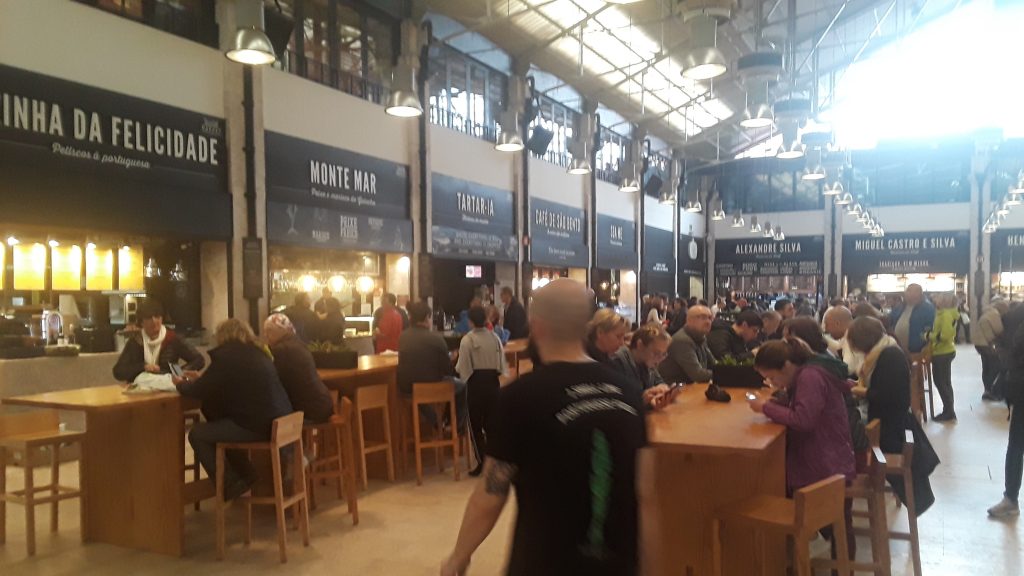
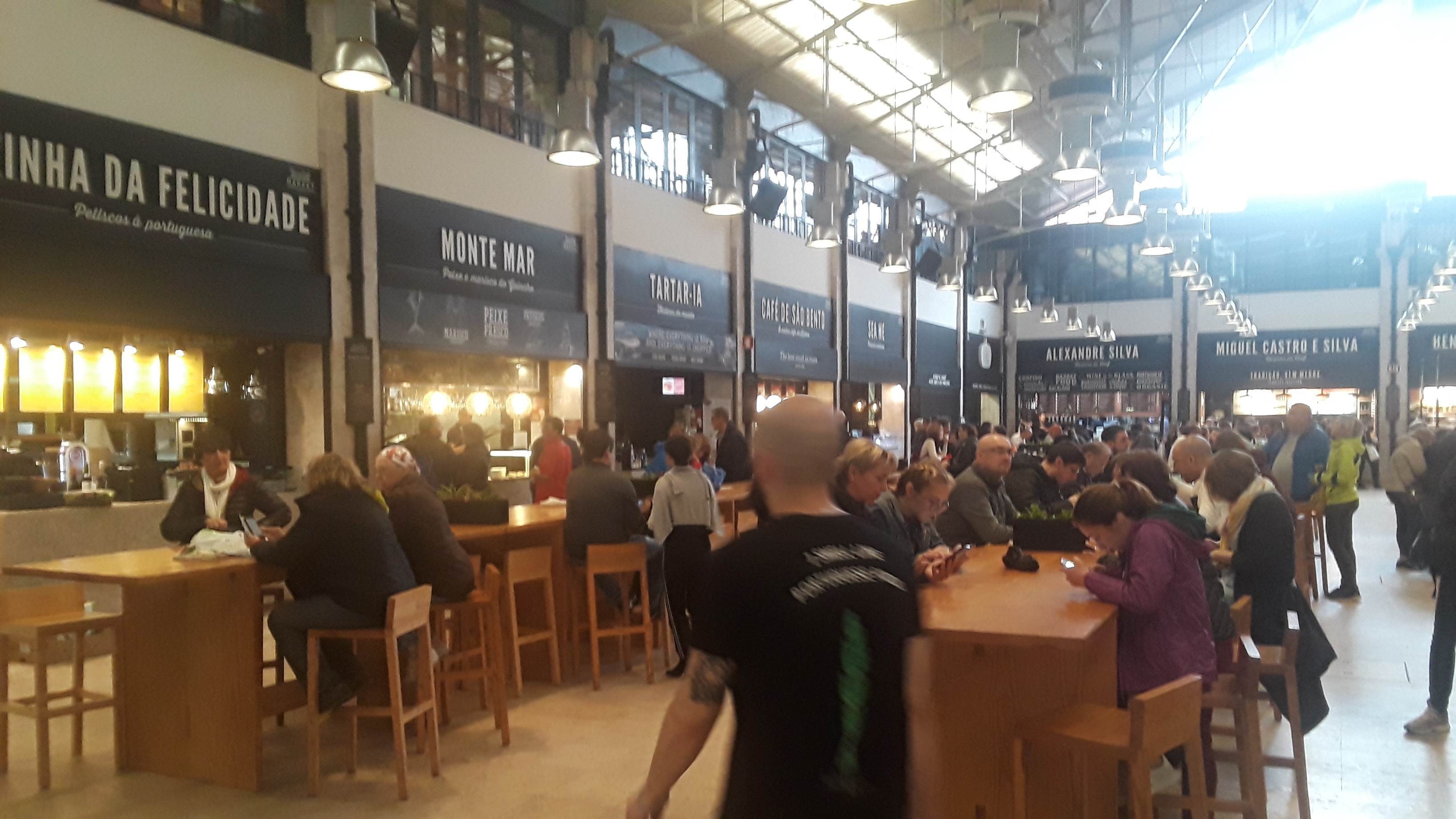
Inside the TimeOut public market.


Inside the TimeOut dining hall. Options and quality abound.

On our walk to the Berardo, we stumbled upon the TimeOut dining hall. It features sit-down options — some with Michelin-starred chefs — or take-out stands full of fine cheeses, cured hams, and beverages galore. Have I mentioned that wine prices go as high as your ego needs, but you can get a perfectly drinkable bottle just about anywhere for 4 Euros? Why drink water when wine is more affordable?

Just ignore the cost of airfare, which blows your average bottle cost out of the water.

Copyright © 2026 Chisel Chips

Theme by Anders NorenUp ↑