Category: Life

A magic moment during an artsy mood encounter

Most of my creative energy flows into writing. That river branches into a visual stream. For most of my life, I’ve kept a file of ideas for physical art that came to me unbidden. In 2017, I experienced a burst of energy. Like my soul got in my face and said, “What are you waiting for? Get your ass down in the I garage and make this shit.”

So I did. Before I was done, I had created three sculptures and a painting. These all relied heavily on found materials. I love browsing the scrap piles at construction sites. Other stuff just falls from heaven, like when I’m walking through a parking lot and look down and spy a lost baby pacifier. It goes into the art bin, for future work.

I’ve been feeling the urge again lately. I have an idea that involves a vertical piece of natural (as opposed to milled) wood. I went through the transfer station, looking at the yard debris pile for something I might use. Nope. I looked at my own wood pile. Nope. Too short.

Yesterday, on my daily dog walk east of town, I came to the turn point at the Pocket Falls. Last winter, during a storm with strong wind, a large fir snag toppled into the base of the falls. Ka-blooey. Wood everywhere. While the dog sniffed, I scanned the debris pile. Ah-ha! There it was. The perfect piece, correct diameter, and with some judicious trimming, of perfect length (height).

I was clearing branches that held it down, yanking on it, when two bicyclists stopped, a young man and his girlfriend.

“What are you doing?” he asked.

Not accusatory. Just curious. Love that. If you wonder, ask. So I told them about my idea and how I hoped to use the log. I dragged it to the side of the road. “I’ll get it next time, when I’m not dragging a dog,” I said.

We parted. “Good luck with your project,” she said.

A hundred feet toward the trailhead, the male cyclist pulled up next to me.

“If you want, I can take the log to the trailhead for you,” he said.

“Seriously? You don’t need to do that.”

“It’s not a problem. It would be easy on my bike.”

“That would be awesome,” I said.

He asked my make and model of car, so he could set the log near it. Then he went back and got it and the last I saw, he was riding up ahead of me with a piece of my future sculpture perched on his shoulder.

His girlfriend rode past. “What are your names?” I called.

She told me. “Thank him again for me,” I said.

“He likes to do this.”

And off she rode.

I am that which I decry

Right before I typed these words, I paused the podcast episode of 70 Over 70 focused on the writer Russell Banks, 81 at the time of the interview. Before I thought I should jot a few notes here on the challenges today of focus, of giving myself permission to … do … just … one … thing.

At a time. Not serially, which is the way of life. Our current situation offers us so much attraction (or is it distraction?), from streaming video to podcasts to email and social and (imagine this) reading a book, the biggest challenge for many of us becomes deciding. Which will I do, and can I invest myself fully in that stream to finish it, or at least take it to a logical point of pause?

As I write, our region of the world is enduring a heat wave of memorable proportions. The pattern, here in the Columbia River Gorge, is to engage short spells of high heat that serve as punctuation in the stream of consciousness that is cool air flowing from the Pacific Ocean up the river’s channel to Oregon’s eastern deserts.

It’s natural air conditioning. I love it. Until it stops. Then I have to figure out what to do with my days, because no wind means no windsurfing. Do I contradict myself to say that hot spells also are a blessing in disguise, as much as I love my windy sport, because suddenly I have time to just read a book or magazine article. Or … well, you saw the list of options already.

So, after a morning run with my dog, I took the liberty of parking myself beneath the overhang of our deck with a glass of iced coffee and Julie Otsuka’s “When the Emperor Was Divine.” Great book, so delicately observed, so sad and tragic a depiction of one family’s experience with internment during World War II. By all means, read it. And reflect.

Then it was an article in the New Yorker about the environmental tragedy of shipping containers tipping from ships into the ocean. That article segued next to Banks and trying, as I listened, to read George Saunders’ Substack. While editing a short story I’ve been working on. That is NOT focus. The mind was NOT made for that much multi-tasking.

The congestion ultimately pushed me away from all of that to yet another diversion — the writing of this blog post.

It’s hotter than ding-dong outside. Think I’ll corral the dog and chase some cool water.  I need to calm my fidgety appetite for mental input.

A car covered in stickers is a person wanting to be known

We were driving north from Portland toward Tacoma today, when we passed a small import. Maybe a Toyota Yaris. Not sure, because the car was blanketed in stickers.

At 75 mph, and hands on the wheel, I didn’t have time to write down an inventory of what this person had put on their car. I made a crack, that if it wasn’t for the stickers, the car might fall apart. It was fairly new. To most people, that’s when you want to avoid the stickers and put your shiny new-car face out to the world. But this person (no idea if male or female) had covered the side rear windows and rear window and some of the trunk and rear bumper with stickers.

I commented about the absurdity of it all, but my wife saw something more.

“Everybody wants to be known,” she said. “They want their friends and even people who aren’t part of their life to know who they are, what they care about, what matters to them.”

To her, stickers are way to put it all out there. To make sure they don’t die without having had a chance to assert their likes and dislikes, their loves and loathings.

To assert one’s individual salad of preferred flavors. To deny anonymity. To pre-empt the disinclination of most people to peel back the layers of those they meet.

My wife and I talk often about the types of people we meet. Some show genuine curiosity. They ask questions about you, sincerely want to learn who you are and what you love.

Others couldn’t give a shit. They are more than happy when you inquire of them and their lives, their loves and loathings, their kith and kithin’ kin. Interrogate them until the cows come home, but once you stop, they go mute. They don’t know what to do next, when the spotlight fades. They never show any interest in others. They are all sticker, no car.

In Tacoma later that week, a good longtime friend of ours would be attending a memorial for her brother. He died at age 67. She wrote his obituary, celebrating his engaging personality and a successful career in business, much of it focused on boats built in and around Tacoma for use in the Puget Sound and the fertile fishing waters of Alaska. He was a genial, engaging guy. And gone.

I never knew him or had the chance to engage before he passed. But I wish now that I could see his car. What sort of stickers did he put on his Tesla? Or Subaru? Or did he forswear such gauchery? And if he did, how did he pass to the next level with any confidence that he was known?

His sister knew him. Her obituary described a person well worth knowing. Nothing about his choice of car.

One’s choice of car says much to the world in which it rolls. Grandfather types of a bygone generation buy Buick aind Oldsmobile. Hipsters or a more recent vintage buy Hummers and sprinter vans, to present a gallery of toys to a discerning public.

Stickers take it to another level. I want to meet a guy with a Freaks for Bernie and an AC/DC and a Doobie Doobie Do sticker. Tarkio Road, dude. Right on. Tight fence. Give my regards to the Big Guy. See you when we meet the Spirit in the Sky.


“Hobo Heart” publication is a little bit like pregnancy and birth

Not that I would know a bit what it’s like to be pregnant, or give birth. The analogy may make a little more sense if you understand that submitting a story for an editor’s consideration, and then hearing that they want to publish your story is only the start of a process.

It takes time, just like a baby, for a story to reach the oxygen outside. Lots of work on the publication’s side, to tweak your text into the format the publication features. And time to wait until it can fill a hole in the calendar. Other stories and other writers must land their planes first.

Now I’ve gone and done it. Switched metaphors in mid blog post. From babies birthing to airplanes landing.

All that is prelude to the news that a long-loved and labored-over story of mine, “Hobo Heart,” has launched at the highly regarded Mystery Tribune. This story emerged from a variety of influences. I routinely read the police reports in our local paper. Sometimes bad behavior suggests fiction.

I also am a student of our nation’s sad history around race relations. I didn’t know much about it until I went away to college. When I started studying abuses heaped on black Americans, the history of chattel slavery, Jim Crow laws, terror lynching, economic disadvantage, I found myself trying to imagine what it was like, growing up black in America, when the weight of social oppression awaited every day.

Then I read an item in the paper about a report of books and a bicycle being found along our local tracks. And missing cattle. All that started mooshing around in my head until I had created a black sociology professor interested in seeing for himself what his father and grandfather had seen. And Bub, the white hobo embodiment of all that history and hatred. I set the major part of the story in my own backyard, the cities and towns of the Columbia River Gorge.

Anyway, if you get a chance, please read it. The folks at Mystery Tribune told me about a year ago they wanted to run it. Like babies, these things take their time to see the light.

Responding to a response to a response to a letter sent to the world

I’m not much of a social media person. I like direct contact, which is why I will fire off an e-mail note to someone whose work or other actions has been particularly impressive. I believe in saying “thanks.”

When I recently read a letter to the editor in The New Yorker, I enjoyed the sentiments and felt a parallel with my own experience. So I looked up the writer, and found a web page (so old-school, right?), and (egads!) contact information.

I wrote a note.

And he wrote back.

And so it went.

I’ve pasted our exchange sequentially below. It left me feeling a sense of elation, that people like Ken Bates and his wife are out there in the world, working hard, doing what it takes to make a life — far beyond the inanity of our political yammering classes and their lumpish militants.

(from New Yorker, Nov. 23, 2020)
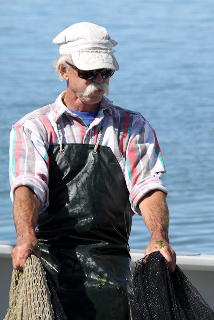
Obamacare and Me

Barack Obama’s memoir of how the Affordable Care Act was passed illuminated the origins of a policy that has affected me profoundly (“The Health of a Nation,” November 2nd). I am a career commercial fisherman. In the nineteen-seventies, when I started working, fishermen and merchant mariners like me had federally supported health coverage through a scheme that had existed for decades. That scheme was terminated, in 1981, by Ronald Reagan. For a time, I bought private insurance, but eventually it became too expensive for my seasonally fluctuating income.

When A.C.A. insurance became available, I quickly signed up. A year later, I had a heart attack, and needed a cardiac stent. The plan I obtained through the health-insurance exchange covered my extensive medical bills and, as a result, my wife and I were able to keep our home, our truck, and our fishing boat.

I am now seventy. This summer, I spent a hundred and ten days on the ocean. No one gets where they are without the help of others. It was a pleasure to read this piece, which illustrated in such detail how I was helped by folks I will never get to meet.

Ken Bates
Eureka, Calif.

(My note to Ken, and our back-and-forth)

Ken

It was so great to see your letter in the current issue of the New Yorker. It mirrored my experience. I had insurance from my business in newspapers for many years, but after I went freelance in 1997, I had to pay my own. Rates kept going up, even though I never claimed a dime. Luckily, I stayed healthy (I work out, run, windsurf).

I watched progress of ACA. Why they waited until 2014, beyond me. But when it arrived, I benefited from supplements and coverage. One benefit was coverage for a colonoscopy after age 50. I got one, it found a large mass in my colon, which surgery removed. It was benign, but could have become cancer.

I’m now 70. I figure I’ve had a glorious additional six years because of the ACA, and even though my surgery under the pre-Medicare insurance cost my wife and me about $11,000 out of pocket, the insurance covered the other $41,000 of the bill. In each of those facts, so much to unpack.

We have been getting screwed by the insurance companies for years. Read “The Bitter Pill” in Time magazine to learn how they have worked the con. The ACA was not perfect (it kept insurance companies in the game), but it got us a step closer to Medicare for All. I’ve got it. Why doesn’t everybody?

Best of health and success to you,

Stu

Good evening Stuart,

Thank you so much for your comments concerning my letter to the editor in the New Yorker and taking the time to track me down. Your story concerning your experience with the ACA is exactly the reason that health care for the American public is so important. I have had the “opportunity” to experience health care costs both ways.

Before the ACA, my wife and I were uninsured, but we have led a very fiscally conservative lifestyle. Through the years we have tried to save as much money as we could. 9 years ago, after spending the summer trolling for salmon on the ocean, the two of us came home, switched fishing gears and proceeded to fish anchovies for 22 days straight, nose to the grindstone and no breaks.

3 days later, I got my hand smashed between two filthy fish bins in the back of a guy’s truck. That led to a MERSA infection, 8 days isolated in the hospital and surgery. Even with a 30% discount with a cash payment, the hospital bill erased most of the income from our summer and fall work.

Again, I really do appreciate the time you have taken to contact me. I am curious about your newspaper and writing work and where you wind surf. I have board surfed since fifth grade. Linda and I usually take a month in February to surf and hike in the desert in Baja California. The two of us live on a small island in Humboldt Bay. It has been frosty the last couple of nights and we expect it will be a cold one tonight. It is probably chilly where you are too.

Stay warm and stay healthy,

Ken and Linda

Ken,

So good to get your note, and so sad to read of your encounter with the medical-insurance complex. What a tragedy, that someone who can work so hard to make a buck finds it stolen because of an accident for which he needs care. I say stolen, because I believe that is what it is. The people who fixed your hand did a good job, and probably got a decent check for it. But the real theft was the skim that the hospital took, and all the other expenses they loaded into that bill.

The chief exec at a small hospital in The Dalles makes over $700,000 a year. Does he deserve it? Ha! Guess I know the answer.

Yours sounds like a lovely life, nonetheless. I would love to meet you and Linda some day. I almost went to school at Humboldt, shifted to Southern Oregon, finished my journalism studies at Oregon. Ended up back in Ashland for 14 years, working at the Medford paper, hiking all over southern Oregon and northern California. Love it down there.

When I was a kid, I wave-surfed in SoCal, but too many people for me back in the late ’60s, so I ran away to Oregon and never looked back.

My wife and I are taking a winter break to spend some time in Summerland, south of Santa Barbara. No plans for our return route. If we detour along the coast, I’ll give a call. Maybe we can grab a beer (if the Covid situation permits).

Best to you both,

Stu

Good morning,

If Linda and I had to pick a place to hang out in Southern California, it would be Summerland. I grew up surfing on that stretch of coast, and I fished lobsters out of Santa Barbara for about ten seasons. We have a ton of friends there including five or six commercial fishermen that are in our code ( radio) group when we fish salmon every summer.

If you find yourselves driving through Eureka, let us know. We have a guest cabin here on the island, and would be happy to put you up for a night. Otherwise we would love to bring you over to the island for a visit; the only way to get here is by boat.

Happy thanksgiving,

Ken and Linda
A fog from a fire and the fog of arrogance and the fog of incompetence and …

I love fog. I’ve got fog, but I don’t love this fog. This fog is the devil spawn of fire. Smoke, shoved west from its forest home by flames a-billion, then back east by a shift in pressure and wind.

Now it’s ours to enjoy, and not so much the folks to our west. It’s rated hazardous, on the scale of deep breath-to-stop breathing.

North to south, our state is ablaze. Nearly a half-million people have evacuated their homes. They have gone … somewhere. God knows where, but I don’t. They might be at Safeway.

We live just north of Mt. Hood, the blessed 11,000-foot barrier between our county and the burning county to the south. Maybe that county’s residents fled here. It seemed, if that was the case, that they had first decided to stock up in the middle of our Covid-19 pandemic at Safeway.

Mid-day on a September Friday in which nobody was going anywhere for fun, for lolling by a lake, for sipping a beer and dipping one’s toes in chill water, for grilling mashed pork in the skins of mashed pork, I’m standing six deep in a line to buy eight items.

I would love to go camping, but who wants to do that when the smoke is beyond healthy, even for my dog. Satchel tired out earlier than his usual point of fatigue when I took him up into the gloom to chase his sticks and takes his drinks in Indian Creek. (Sorry, that’s its name; no offense intended.)

So we hunker down further, again, more, after months of hunkering from Covid-19. Now we open our doors, and we can see the attacker. We peer out at the smoke lowering like the invasive gloom of a John Carpenter movie (“The Fog”. If Adrienne Barbeau emerges, I’m fine), and wonder if we should inhale, or hold our breaths until all this abates.

Or pack our cars with essentials and legal documents before we flee for our lives.

All that notwithstanding, my wife is off to one of her opportunities to cook. She will endure untold indignities and suffer ridiculous fatigue for the chance to stand before a stove and paint a masterpiece.

She is offering her labors to support a local education foundation. The people for whom she donates time seem to have no clue that it takes a kitchen and utensils and flatware and recycling and trash to make it all happen.

Numerous calls to the winery in charge of provisioning liquid excellence go unreturned. Should my dear show up there to receive their contribution, or not? Eventually, one of their beknighted tribe returns a call.

No, she does not know how many bottles of each wine to assemble for my wife to pick up.

“An email was sent.”

“Sorry, didn’t get it.”

My dear is so restrained. She does NOT say, “Well, talk to the idiot to whom I sent the email and figure it out, because you’ve had a FUCKING WEEK to do that, and I’ll be there in 10 minutes.

No, she says, “thanks for the call.”

At the other end of the line sits the definition of arrogance. If you are paired into an enterprise designed to elevate your brand and share your product, please, do your part. Your wine will not arrive in the glass by divine grace.

No matter, the people who are blessed to view and consume this thoughtfully created meal when it arrives before them will appreciate it mightily. But not nearly enough. If they do, they never say. It is all hay to cattle such as they. The winemaker, for whom a plate was set, fails to show. “Fucking great,” one of the professional drug dealers says as he and his team of profiteers depart.

Fifty or a hundred years from now, the auctioneers at Christie’s will collect bids from people who have heard about this evening, and wish to buy a memory of it.

Millions will change hands.

And my lovely bride will be dead.

But I will be there with her, in the beyond, to smile down on the people who seldom appreciate genius in their own time, because they are too busy celebrating (or trying to get others to celebrate) the geniuses they imagine themselves to be. Opioids will do that to you.

Sigh.


Copyright © 2026 Chisel Chips

Theme by Anders NorenUp ↑